
eine Nachricht hinterlassen
Wenn Sie an unseren Produkten interessiert sind und weitere Einzelheiten erfahren möchten, hinterlassen Sie bitte hier eine Nachricht. Wir werden Ihnen so schnell wie möglich antworten.
A solar ballasted roof holds the array down with weight instead of bolts. On a flat or low-slope commercial roof, that single decision removes every penetration through the waterproof membrane — and moves the engineering question from “where do we drill?” to “how much ballast does this array actually need?”. Get that number wrong and the array either lifts in a storm or overloads the deck. This guide covers the load path, the checks that set ballast weight, and the layout choices that keep a ballasted solar roof safe without over-ballasting the building.
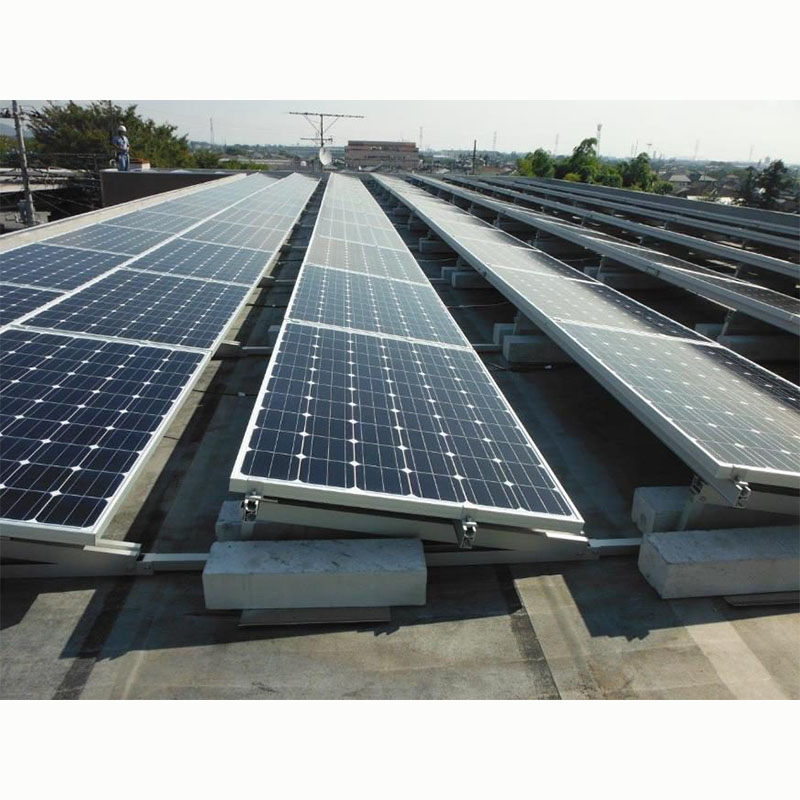
Every ballasted array is a balance between two forces. Dead load — the modules, rails, trays and ballast — presses the system onto the roof. Wind passing over and around the array creates uplift, especially at corners, edges and the windward row. Friction between the ballast trays and the membrane, plus the weight of the ballast itself, has to exceed that uplift with the safety factor required by the local code. Wind deflectors on the front row reduce uplift and can lower the ballast required, which matters on older buildings with limited reserve capacity.
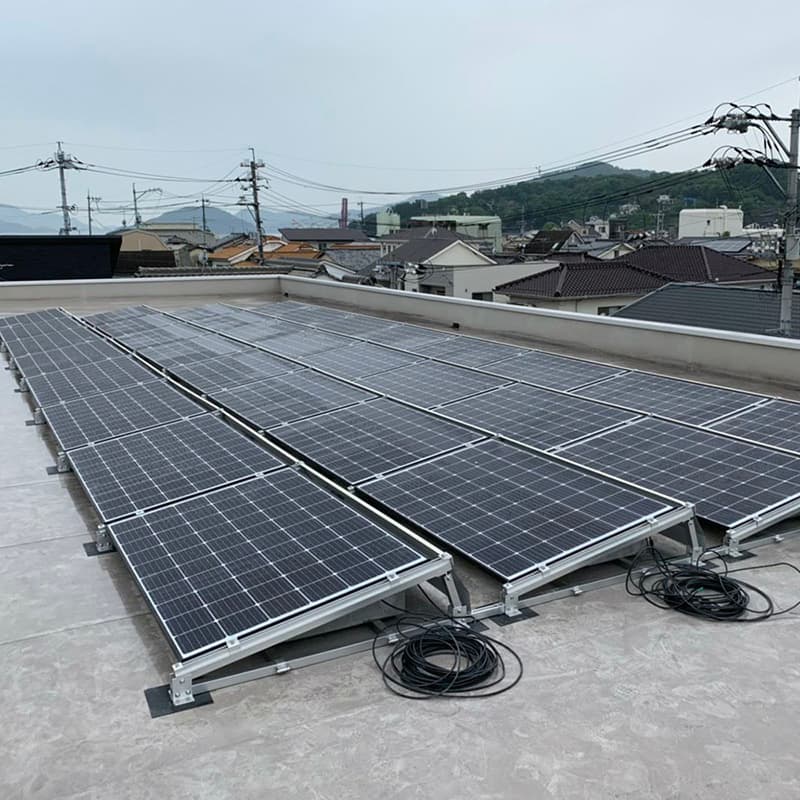
There is no universal kilograms-per-square-metre figure, and any supplier who quotes one without asking about your building is guessing. Ballast weight is calculated from four inputs: the design wind speed and terrain category, the building height and parapet height, the array geometry (tilt, row spacing and module overhang), and the roof’s structural capacity. The output is a ballast schedule per row and per zone — heavier at corners and edges, lighter in the field. That schedule should arrive with the layout drawing and be signed off by a structural engineer.
Ballast never sits directly on a bare membrane. Trays and blocks go on protective pads, and every contact point is checked for sharp edges. The layout must also leave the roof’s drainage path clear: water has to reach the outlets without pooling against a ballast tray. Keep a maintenance walkway between rows, and leave the parapet and outlet zones accessible. On a roof that already ponds, fix the drainage before adding an array — ballast makes a small ponding problem worse.
No. The array is held by weight and friction, so the racking never touches the membrane. Cables still need a route to the inverter, and those entries must be flashed properly even though the mounting system itself is non-penetrating.
It depends on wind load, tilt and layout. Ask for a ballast schedule in kg/m² plus the total tonnage per zone, then have a structural engineer compare it with the roof’s available load. Do not accept a single average figure for the whole roof.
Often yes, but the ballast and restraint design has to match the wind calculation. In extreme exposure, a hybrid layout with mechanical anchors at the perimeter can be the safer choice than adding more weight.
9Sunsolar supplies a complete ballasted solar mounting system with pre-assembled trays, aluminium rails, mid and end clamps, protective pads and optional wind deflectors. Send us the roof drawing, parapet height, design wind speed, module size and available roof load, and our team will return a layout with a per-zone ballast schedule and bill of materials.
For projects that mix roof types, the same non-penetrating flat roof racking range covers large commercial and industrial buildings, so one supplier can keep the ballast design consistent across the portfolio.
Abonnieren Sie unseren Newsletter, um aktuelle Informationen, Werbung und Einblicke zu erhalten.


 IPv6-Netzwerk unterstützt